
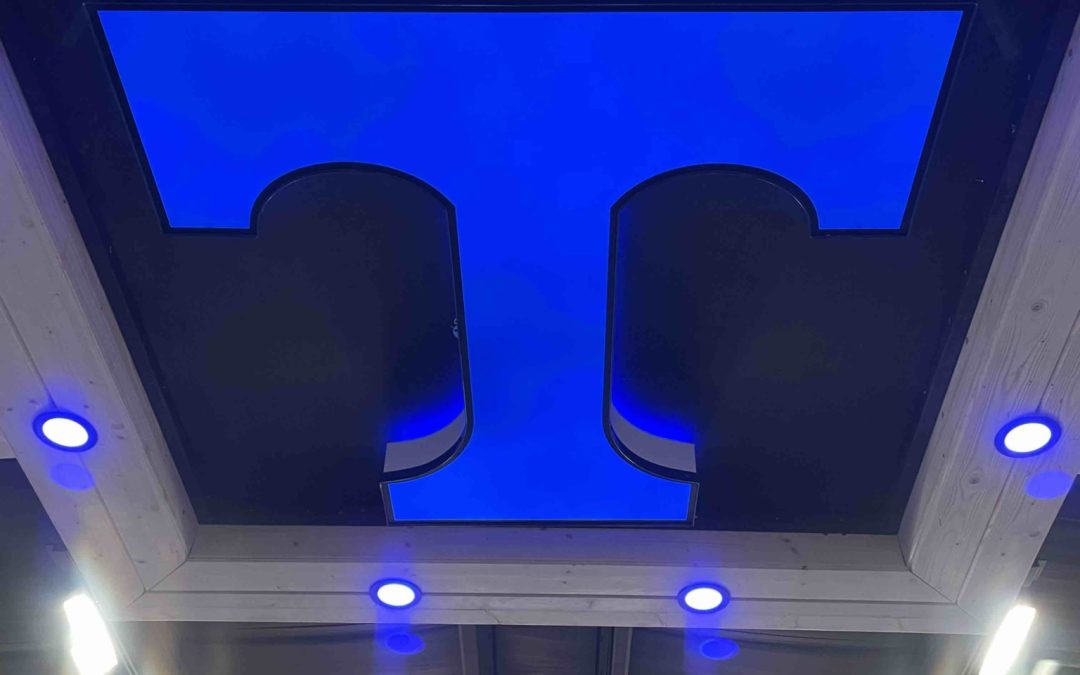
 A six-foot section of slat wall on our Chattanooga shop floor shows you more than any rendering can. Visual Impression Sign Solutions keeps sample sections built up in different wood species, slat spacings, and LED color temperatures so a Chattanooga restaurant owner or office designer can see the spec choices live before committing to a hundred square feet of finished install. Six variables drive the look.
Wood Species Carries the Tone of the Room
White oak reads bright and contemporary, walnut reads warm and grounded, and stained or painted MDF veneer covers a custom color brief that solid hardwood can’t deliver. Solid hardwood expands and contracts with seasonal humidity, which can produce small gaps in winter inside HVAC-cycled spaces like restaurants. Painted MDF holds straighter lines through that cycle and accepts a wider color range. The choice depends on whether the room asks for natural grain or branded color, and we walk through both options against your brand palette.
Slat Spacing Doubles as Acoustic Strategy
The gap between slats decides how the wall reads visually and how the room sounds when full. Narrow gaps around half an inch deliver a tight rhythmic look. Wider gaps approaching 1.25 inches create a more open architectural feel and draw more sound absorption from the felt or PET acoustic backing behind the slats. Restaurants and conference rooms benefit from the acoustic effect on speech-frequency reflection, which is part of why slat walls landed in both environments at the same time.
Backing Color Changes Everything Behind the Wood
Black acoustic felt backing is the standard, with the dark void behind the slats reading clean and recessive. Painted color backings let your brand color appear in the gaps, which can either work beautifully or compete with the wood depending on contrast and saturation. We test the backing-to-slat combination on the shop sample wall before specifying for your build, because the backing color is the variable owners most often regret when they choose by drawing alone.
LED Specification Is Where Walls Win or Lose
Color temperature decides the warmth: 2700K reads warm against walnut, 3000K reads neutral on white oak, and 4000K reads cool and modern on painted MDF. CRI ratings on the LED strip matter as much as temperature. Strips below 90 CRI distort wood grain color and make walnut look orange or muddy, while 90-plus CRI keeps the wood reading the way the architect specified. Aluminum LED channels with frosted diffusers eliminate the visible-dot effect that ruins a continuous line of light.
Brand Integration Inside the Slat Plane
Cut logos, dimensional letters, and halo-lit brand marks integrate into the slat plane when the wall is designed for it from the beginning. We routed the slat layout around the logo footprint, with mounting hardware concealed behind the slats and lighting routed through the same channel system. Stop by our Chattanooga shop or dial (423) 635-7144 and we’ll set you up at the sample wall to spec your slats, your light, and your logo before anything goes into production.